
“To be or to do? Which way will you go?”
“Tiger, one day you will come to a fork in the road,” he said. “And you’re going to have to make a decision about which direction you want to go.”
He raised his hand and pointed.
“If you go that way you can be somebody.
You will have to make compromises and you will have to turn your back on your friends.
But you will be a member of the club and you will get promoted and you will get good assignments.”
Then Boyd raised his other hand and pointed another direction.
“Or you can go that way and you can do something, something for your country and for your Air Force and for yourself.
If you decide you want to do something, you may not get promoted and you may not get the good assignments and you certainly will not be a favorite of your superiors.
But you will not have to compromise yourself.
You will be true to your friends and to yourself.
And your work might make a difference.”
He paused and stared into Leopold’s eyes and heart.
“To be somebody or to do something.
In life there is often a roll call.
That is when you will have to make a decision.
To be or to do?
Which way will you go?”
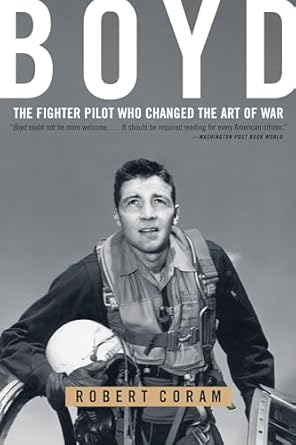
Boyd: The Fighter Pilot Who Changed The Art Of War — Robert Coram (2002)
One of the most compelling aspects of the book is the way it shows how Boyd’s ideas were initially met with resistance and skepticism from his colleagues, but ultimately gained widespread acceptance and became the foundation of modern military doctrine. It’s a testament to Boyd’s persistence and conviction that he was able to overcome the obstacles in his path and leave a lasting legacy.