
Walking Naked
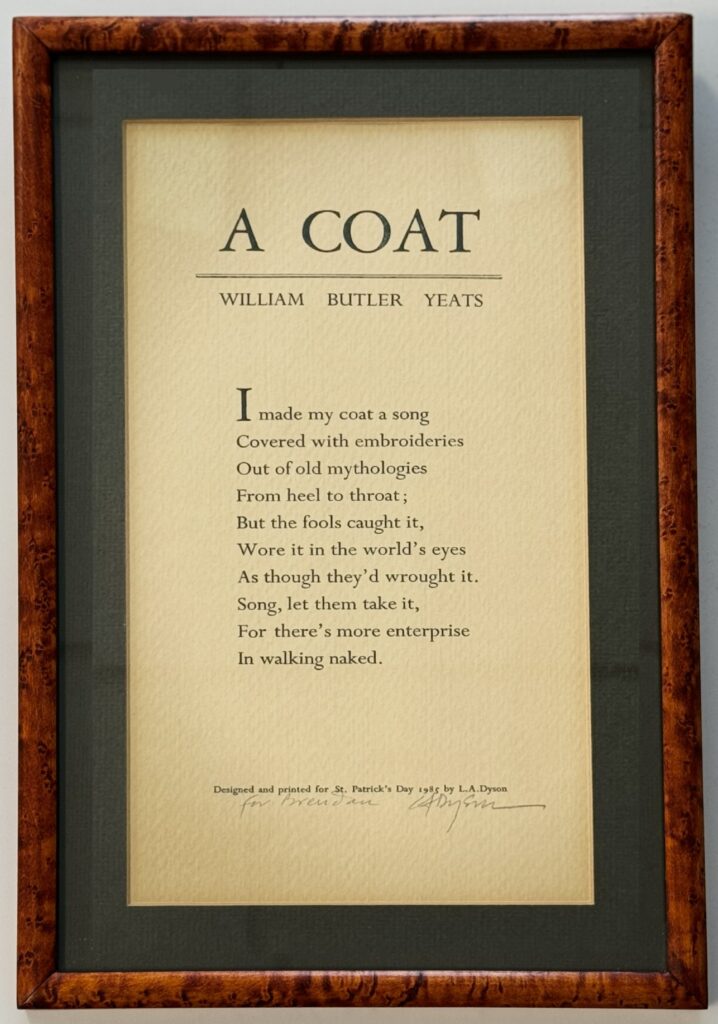
I hung this poem on my wall when I was young. It took me forty years to understand.
Yeats was a dreamer and a fighter, an Irish poet born in 1865 who believed the modern world was losing its soul to materialism, dullness, and disconnection.
He saw life as enchanted, filled with myth, mystery, ancient heroes, faeries, visions, and eternal longings. Through richly embroidered poems, he tried to awaken his readers, and especially his own troubled nation, to reclaim the sacred, live with soul, and choose the eternal over the ordinary.
Yeats wrote A Coat in 1912 to mark a sea change in his poetry.
Until then, his poetry had been written in an ornate style.
When imitators turned what he had crafted as an authentic expression of Irish soul and imagination into superficial fashion, he became discouraged, moved on, and embraced simplicity.
He did not abandon his soul or the magic. By abandoning ornament and embracing simplicity, he went on to produce some of his greatest work.
Finance, like poetry, is a social construct.
I have spent forty years pursuing a prosaic but no less magical idea.
How to help companies finance with the least deleterious impact on their shareholders’ equity.
For the three decades after I hung the poem, I wove process, provisions, features, folklore, and magic from the past into increasingly intricate convertible transactions.
My purpose remained constant.
The market changed.
Over time, convertibles themselves became increasingly ornate. More provisions. More restrictions. More derivatives. More complexity intended to mimic a better outcome for the pricing room. Process imitated, purpose abandoned.
I too became discouraged, moved on, and embraced simplicity. In doing so, I am finding the best work of my career.
And now I understand.
There is more enterprise in walking naked.