
Can Your Biotech Take the Crown?
In the closing scene of 1954’s classic On the Waterfront, Charley tells his brother Terry, played by Marlon Brando, that the tragedy of his boxing career came from bad management and bad breaks. Terry pushes back.
You were my brother, Charley.
You should’ve taken care of me a little bit, so I wouldn’t have to take those dives for the short-end money.
Well, I had some bets down for you.
You saw some money.
You don’t understand.
I could’ve had class.
I could’ve been a contender.
I could’ve been somebody.
Biotech is living that same scene today.
The investment bank Charleys take biotechs into the capital markets ring as if nothing has changed, but everything has. Rising rates and passive flows have pulled capital away from the active investors who used to fund biotech. The old model, hit a milestone, deliver good data, raise at a better price, no longer clears the market.
Yet Charley still pushes clients to take the short-end money through discounted offerings that reward hedge funds at the expense of long-term shareholders. The fast money wins the spread. Shareholders take the dive. The post-trade volume shows who was really placing your stock.
I’ve developed a financing model for this new reality. It lets your believers fund your next phase of growth and keep their upside. A pro rata option dividend allows shareholders to exercise to avoid dilution or sell into a public market and keep the trading spread for themselves. It plays offense, not defense, turning dilution risk into shareholder opportunity.
This isn’t about replacing what already works. It adds flexibility when traditional methods fall short. Charley isn’t your banker. Charley is the institution, driven by incentives that no longer match how biotech capital moves. The bankers may be your friends, and mine, but they’re handcuffed by the machine. You’re not. You have agency, and your shareholders expect you to use it.
Choosing to pursue an option dividend through us shouldn’t strain your real relationships. The good bankers get it. A well-capitalized, successful biotech creates more long-term value and more fees over time than any short-end trade. It simply shows you who’s in it for you, and who’s in it for themselves.
This approach evolved from my background as a former Lazard partner trained in arbitrage. I traded biotech convertibles in the 1980s and later built a biotech trading and underwriting business as a managing partner at Robertson Stephens. Today, I run an independent advisory firm in Greenwich, CT with several of my former Lazard colleagues, helping companies finance without diluting out the shareholders who got them here.
We’ve completed six of these option dividend transactions and just distributed our seventh, all met with share price gains on announcement and strong shareholder response. In a world where conventional equity deals spark backlash, this approach draws cheers. Shareholders flood social media with enthusiasm because they feel management is aligned with them.
When investors trust you won’t force them to take a dive for the short-end money, you build the shareholder base and loyalty needed to always have access to capital. That’s how you go from contender to taking the crown. Because capital always flows to where it’s treated best.
And the next time Charley tells you the share price dive in your capital raise is the market, let’s face it.
It was you, Charley.
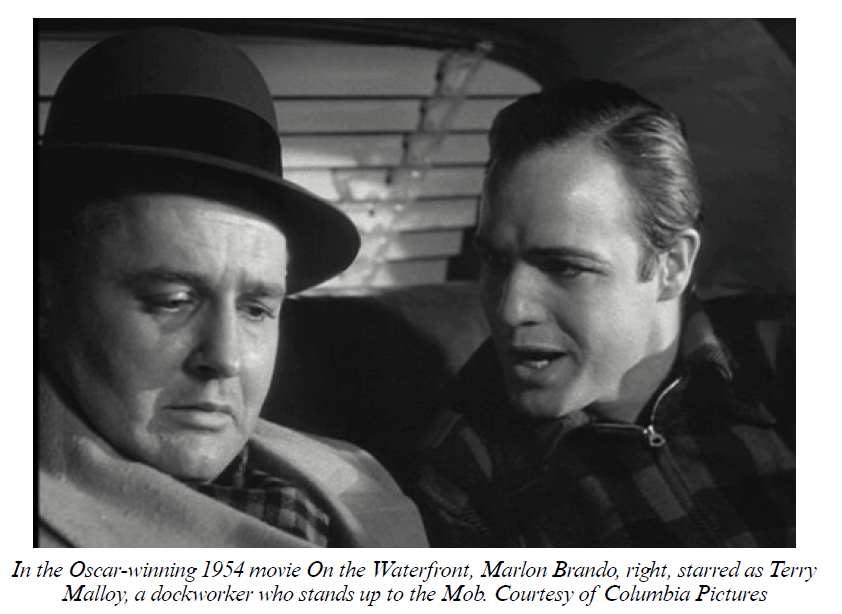
“When you weighed one hundred and sixty-eight pounds you were beautiful” – Charley Malloy
“It was you, Charley” – Terry Malloy